Open SDK

May 2026 — Open

Product design and engineering tools that leverage Open’s ordering primitives to build completely unique and personalized ordering experiences for any restaurant. Built by the design and engineering team at Open.

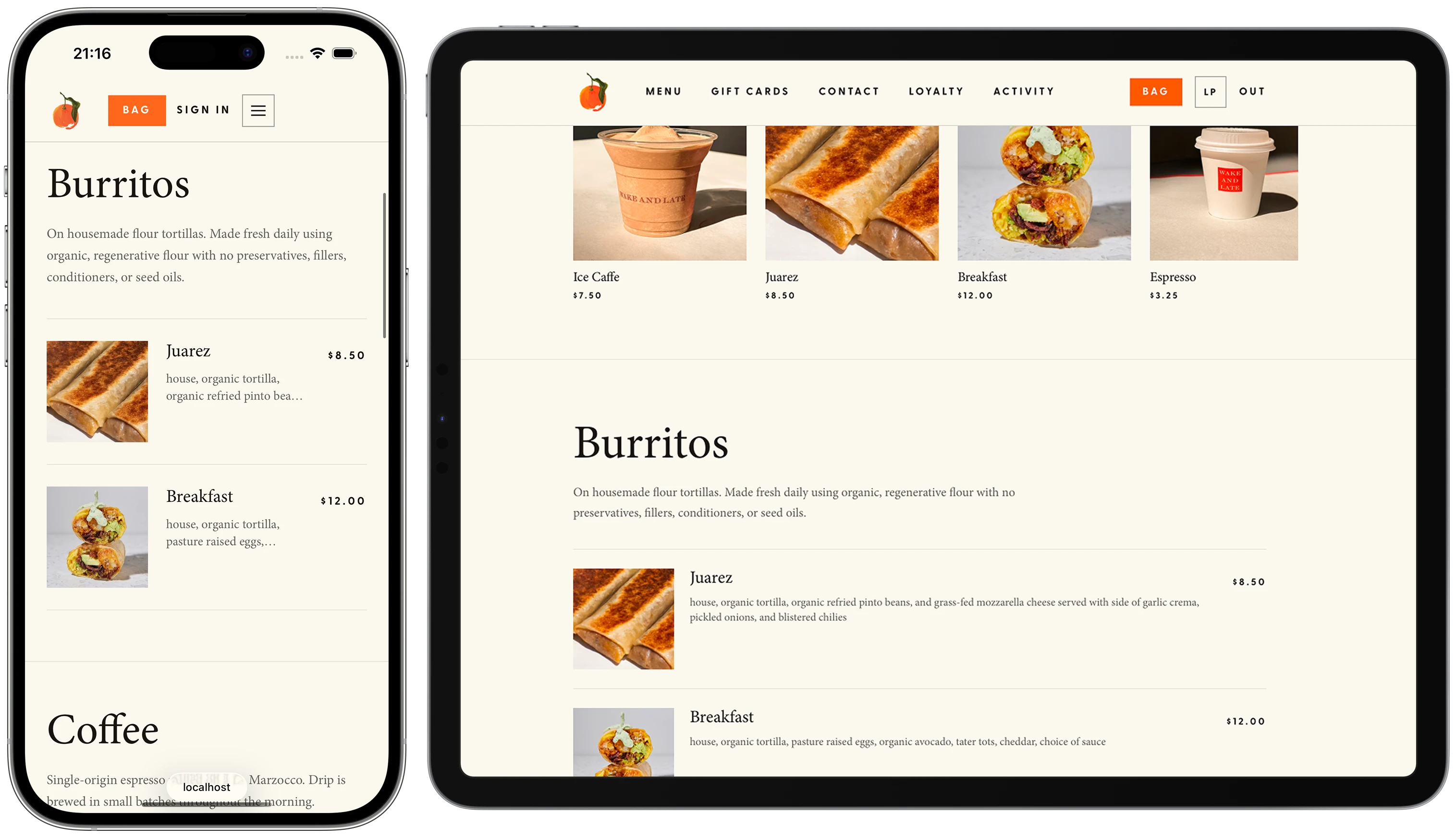
Wake and Late’s ordering site, built on the Open SDK, on phone and tablet
Wake and Late in Los Angeles, built on the SDK.

Why we built it

Over the last fifteen years, a greater percentage of restaurant sales moved online, led by the rapid consumer adoption of food delivery marketplace apps like DoorDash and Uber Eats. By the early 2020s, many restaurants were doing a meaningful portion of their total sales volume online, the majority of which was done in the marketplaces.

This trend had positive and negative consequences for restaurants. Marketplaces helped customers discover your restaurant and drive online sales. But restaurants didn’t own the direct customer relationship for the sales in the marketplaces, and like other ecommerce verticals, businesses began looking for ways to build their own direct channels and the tools to make them successful. For example, CPG companies like Art of Sport sell on their Shopify website and Amazon at the same time, and the restaurant vertical has seen the same story play out.

Few restaurants had an ordering experience of their own that was as good as what customers experienced in the marketplace apps, and even fewer had ordering experiences that were personalized to their brand, concept, and operational details.

How we got here

  1. The 2010s

    Ecommerce reaches restaurants

    It happened slowly. Retail had already moved online. Through the 2010s, restaurants started to follow, and ordering food on a website stopped being unusual.

  2. Mid 2010s

    Mobile, and the marketplaces

    People started ordering food from their phones. DoorDash, Uber Eats and others offered delivery from almost any restaurant, which put thousands of restaurants online for the first time and in front of new customers.

  3. 2020

    Everyone at home

    Covid closed dining rooms and kept people at home. Ordering online went from something some people did to something almost everyone did.

  4. 2021 – 2023

    The habit sticks

    When restaurants reopened, people kept ordering online. They knew how it worked and they liked it. Online ordering kept growing through the early 2020s.

  5. Early 2020s

    A channel of their own

    Online sales were now a big part of the business. Restaurants realized they needed their own ordering site and app, alongside the marketplaces, so they could know their online customers and talk to them directly. This is how it works in every kind of ecommerce: people buy on marketplaces and they buy direct.

  6. The gap

    Every touchpoint, one relationship

    Marketplaces, along with Google and Meta, are how a lot of customers find a restaurant. The customer then orders on the marketplace one day and direct the next. The restaurant’s job is to take care of that customer across all of it. Most restaurants were missing one piece: a direct ordering experience as good as the marketplace’s.
What a direct channel is

A direct channel is everywhere a customer orders from the restaurant itself, instead of through a marketplace. The tools behind it are what make it sell.

The channel

  • Website A marketing website with online ordering attached to it.
  • Mobile app The restaurant’s own app, on iOS and Android.
  • Kiosk Self-ordering inside the restaurant.

The tools to make it successful

  • Email, SMS and push Marketing sent to the restaurant’s own customers.
  • Promotions Offers and discounts, run in the restaurant’s own channel.
  • Upsells Suggested add-ons while the customer is ordering.
  • Loyalty and referrals Cash-back loyalty and cash referrals, built in.
  • And much more

Three ways to build one

A restaurant that wanted a direct channel had three ways to build one.

Way to build Great UX Personalized Within reach
Built in-house Hire your own engineers and designers. Sweetgreen and McDonald’s do this. Almost no one else can afford to. Great UXyes Personalizedyes Within reachno
Custom, underinvested Pay an agency to build something custom, then stop investing in it. The result is slow, dated, and few customers use it. Great UXno Personalizedyes Within reachyes
Standardized Use an off-the-shelf ordering product. It works well and sells, but every restaurant on it looks and behaves the same. Great UXyes Personalizedno Within reachyes

Where Open came in

Open’s first product was one set of products, shared by every restaurant on Open. It was the third option above.

The good

  • Sold direct Gave restaurants a way to sell to their guests online, alongside the marketplaces.
  • Converted A fast ordering experience with best-in-class conversion. Tested, validated, and refined.
  • Grew Built-in marketing and promotions, cash referrals, and cash-back loyalty.

The limits

  • Custom features Hard to build and maintain for many restaurants at once.
  • Personalization Little room to tailor the interface to one concept or brand.
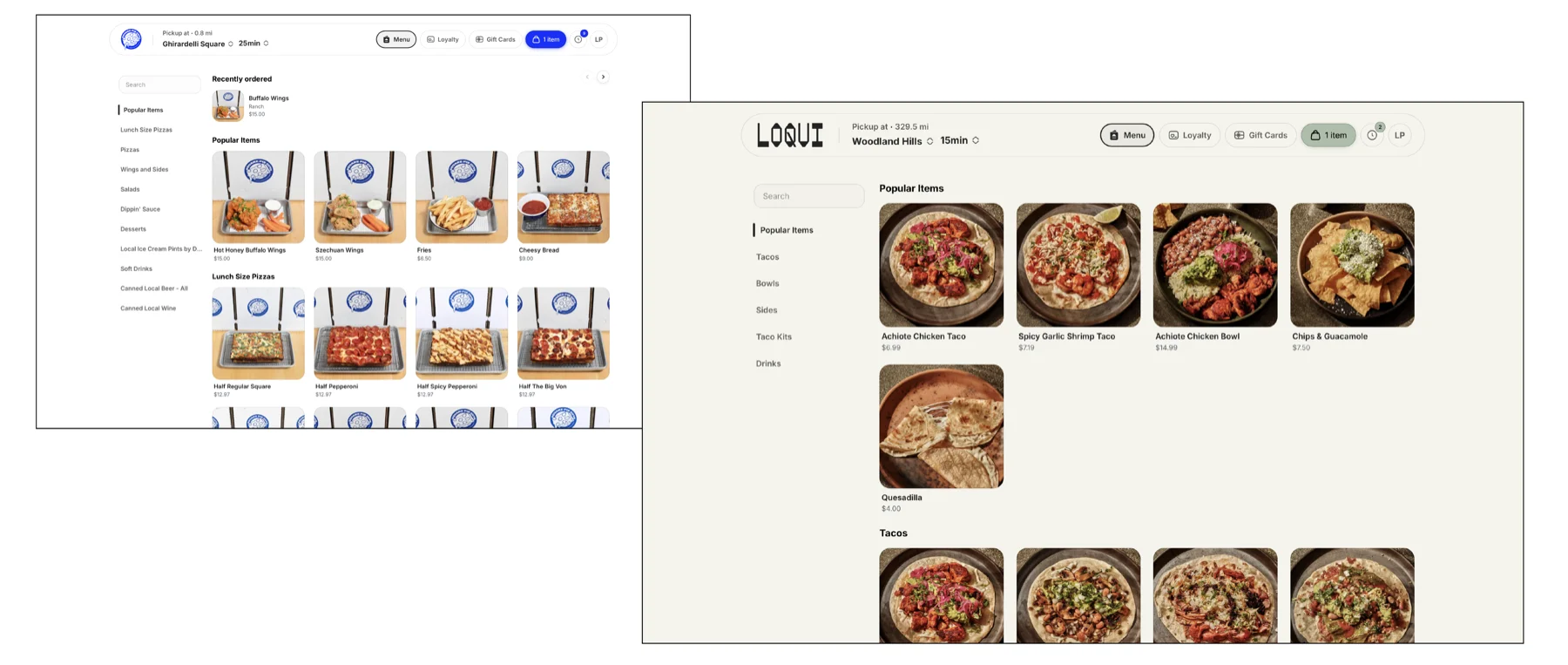
Two restaurants’ ordering pages on Open’s original shared product, laid out the same way with different logos and photos
Two restaurants on the shared product. The same page, with different logos and photos.

At the end of 2025, coding agents hit an inflection point. Engineering teams suddenly had more leverage, enough to rethink how they build products, and which products they build. At Open, that led to a new architecture for everything a customer touches.

Now Open builds each product from scratch for each restaurant, using the Open SDK and coding agents. Every restaurant gets a codebase of its own. The SDK carries the parts that should be the same everywhere, and the agents make the rest specific to the brand, the concept, and the customer.

Before
Open codebase
  • Bluebird
  • Marigold
  • Juniper
Now
Bluebird codebaseOpen SDK
Marigold codebaseOpen SDK
Juniper codebaseOpen SDK
One set of products for everyone, then a codebase for each restaurant with the SDK inside it.
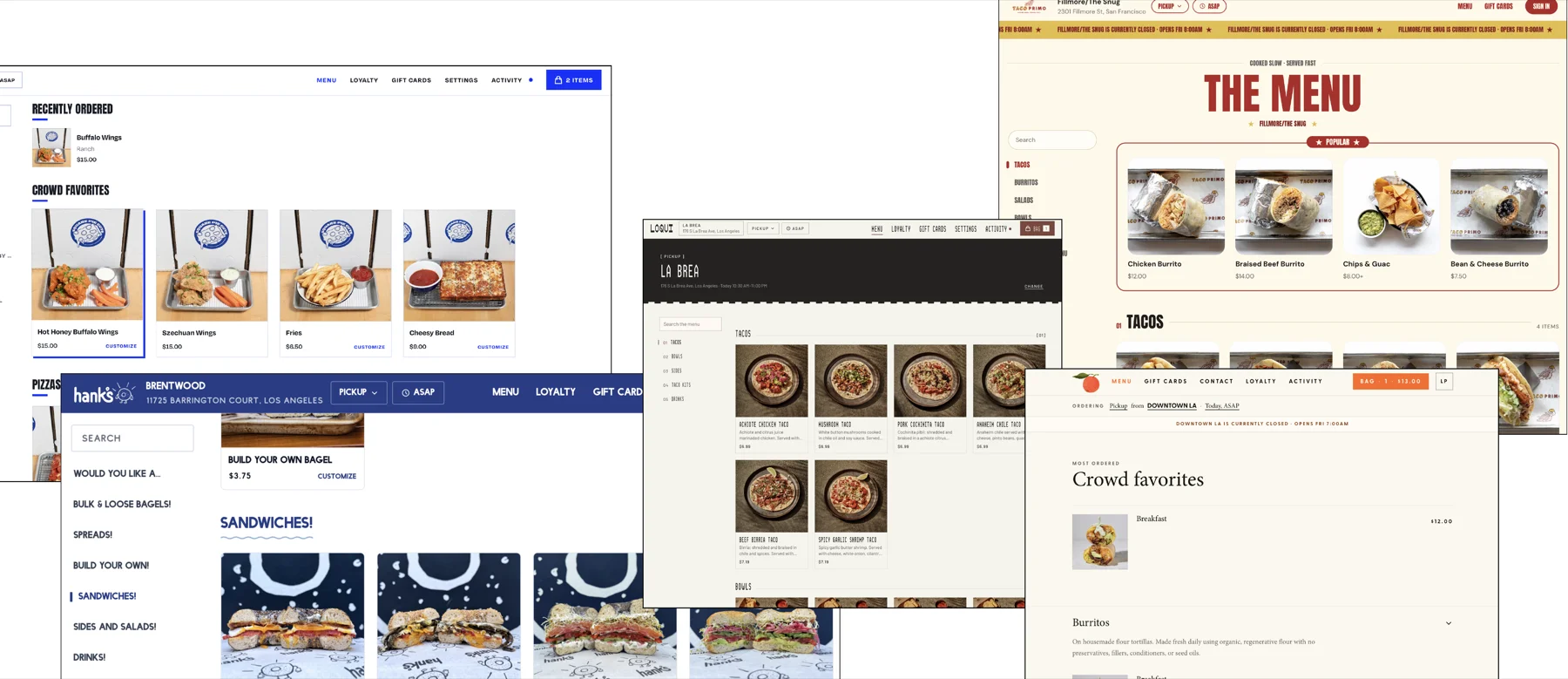
Five restaurants’ ordering pages, each built from scratch on the SDK, each with its own type, color, and layout
Five restaurants on the SDK. Each one looks like itself.
Way to build Great UX Personalized Within reach
Open SDK Any restaurant. A codebase of its own, built on the SDK, tailored to its brand, concept, and customers. Great UXyes Personalizedyes Within reachyes

What an SDK is

SDK stands for software development kit: a set of engineering tools, used inside a codebase, that provide pre-built functionality developers can customize.

The Google Maps SDK, for example, lets companies like Uber and DoorDash show maps inside their apps without building mapping technology themselves.

The Open SDK is used by restaurants to build ordering experiences that sell directly to their customers. It gives them complete control to refine the experience and tailor their interfaces to their brand, concept, and their customers’ preferences.

Bluebird codebase
The experiences
  • Marketing website
  • Web ordering
  • Mobile app
  • Catering
built on
Open SDK 1.0
  • Agentic testing
  • Automatic upgrades and bug fixes
  • Analytics
  • Custom features to build on
shaped by
Bluebird brand
Coding agents
  • Brand edits
  • Merchant edits
  • Open edits
One restaurant’s codebase, and the one way changes reach it. The tools below are how it gets built.

Brand setup

Tools to import your brand to the SDK, then build every product around it.

$ open brand import ./bluebird
  reading brand book ... ok
  learning from bluebird.com ... ok

  ┌──────────────────────────┐
  │ BLUEBIRD                 │
  │ ────────                 │
  │                          │
  │ logo     ●               │
  │ colors   ██ ██ ██ ██     │
  │ type     Aa Gg Rr        │
  │ corner   ╭─ 8px          │
  │                          │
  └──────────────────────────┘

✓ brand imported → style-reference.md

$ ▋
$ open ordering setup
  reading style-reference.md ... ok
  starting from unstyled standard products ... 5

  menu        standard → bluebird   done
  item        standard → bluebird   done
  cart        standard → bluebird   done
  checkout    standard → bluebird   done
  account     standard → bluebird   done

✓ every product redesigned for this brand

$ ▋

Customer experiences

It powers every customer-facing experience.

$ open serve marketing-site
  building pages ... ok

  ┌────────────────────────────────┐
  │ ● ● ●  bluebird.com            │
  ├────────────────────────────────┤
  │                                │
  │   Wood-fired, since 2019       │
  │   ──────────────────────       │
  │                                │
  │   [ Order pickup ]  [ Menu ]   │
  │                                │
  └────────────────────────────────┘

✓ live at bluebird.com

$ ▋
$ open serve ordering
  menu synced ... 42 items

  ┌─────────────────────┬────────────┐
  │ MENU                │ CART   (2) │
  │ ───────────────     │ ────────── │
  │ ▒▒  Margherita   12 │ 1× Margh.  │
  │ ▒▒  Diavola      14 │ 1× Bianca  │
  │ ▒▒  Bianca       13 │            │
  │                     │ [ Pay 25 ] │
  └─────────────────────┴────────────┘

✓ orders flowing

$ ▋
$ open serve catering

  ┌──────────────────────────┐
  │ CATERING                 │
  │ ────────                 │
  │                          │
  │ date     [ 10 / 02 ]     │
  │ guests   [ 40 ]          │
  │ style    [ family ▾ ]    │
  │                          │
  │ [ Request quote ]        │
  │                          │
  └──────────────────────────┘

✓ quote request → your inbox

$ ▋
$ open build app --ios --android
  signing ... ok

      ╭────────────╮
      │    9:41    │
      │ ────────── │
      │ ▒▒▒▒▒▒▒▒▒▒ │
      │ Bluebird   │
      │ Reorder    │
      │            │
      │ [ Pay ]    │
      ╰────────────╯

✓ in the App Store + Play Store

$ ▋
$ open print receipt --order 1847

  ┌╌╌╌╌╌╌╌╌╌╌╌╌╌╌╌╌╌╌╌╌╌╌┐
  │ BLUEBIRD       #1847 │
  │ ──────────────────── │
  │ Margherita        12 │
  │ Diavola           14 │
  │ ──────────────────── │
  │ total             26 │
  │                      │
  │ see you soon         │
  └╌╌╌╌╌╌╌╌╌╌╌╌╌╌╌╌╌╌╌╌╌╌┘

✓ printed in 1.2 s

$ ▋
$ open send campaign --email --sms

  ┌──────────────────────────┐
  │ to: all guests (12,408)  │
  │ ──────────────────────── │
  │ Fall menu is here        │
  │ [ Order now ]            │
  └──────────────────────────┘

           ╭─────────────────────╮
           │ Bluebird: brunch is │
           │ back — this weekend │
           ╰─────────────────────╯

✓ sent to 12,408 guests

$ ▋

Three ways to build and edit them

$ git push origin bluebird-web

  @open/sdk detected
  + <OrderFlow theme={brand} />
  - <LegacyCheckout />

  building ... ok
  deploying ... ok

✓ your repo, your rules

$ ▋
Developer platform For designers and engineers to build in their own repos.
$ open edit

  hero      [ patio-night.jpg ▾ ]
  hours     [ 11:00 – 22:00 ]
  delivery  [ on ▾ ]

  save changes? y

✓ published in 0.4 s — no deploy

$ ▋
Self-service edits For anyone on the team.
$ open request design

  connected to the Open design team

  maya   We’ll take this one — a new
         seasonal menu page by Friday.

✓ ticket #204 opened

$ ▋
Design as a service From Open.

Tools to develop the brand

Edit the brand, and every experience follows.

$ open theme set accent "#28c840"

  website     ██ → ██   done
  ordering    ██ → ██   done
  app         ██ → ██   done
  catering    ██ → ██   done
  receipts    ██ → ██   done
  email       ██ → ██   done

✓ six experiences, one brand

$ ▋

Version upgrades

The SDK keeps improving underneath every restaurant. What each restaurant built on top of it stays.

$ open upgrade --to 1.1
  reading changelog ... 14 changes

  ✓ agentic tests          212 passed
  ✓ bug fixes applied      6
  ✓ analytics updated
  ✓ custom features kept   3

✓ bluebird on Open SDK 1.1 — nothing to redo

$ ▋

Two stores, or two thousand

From SMB to enterprise.

$ open scale --stores 2

  ■ ■

✓ 2 stores live

$ ▋
$ open scale --stores 20

  ■ ■ ■ ■ ■ ■ ■ ■ ■ ■
  ■ ■ ■ ■ ■ ■ ■ ■ ■ ■

✓ 20 stores live

$ ▋
$ open scale --stores 200

  ▪▪▪▪▪▪▪▪▪▪▪▪▪▪▪▪▪▪▪▪▪▪▪▪▪▪▪▪▪▪▪▪▪▪▪▪▪▪▪▪
  ▪▪▪▪▪▪▪▪▪▪▪▪▪▪▪▪▪▪▪▪▪▪▪▪▪▪▪▪▪▪▪▪▪▪▪▪▪▪▪▪
  ▪▪▪▪▪▪▪▪▪▪▪▪▪▪▪▪▪▪▪▪▪▪▪▪▪▪▪▪▪▪▪▪▪▪▪▪▪▪▪▪
  ▪▪▪▪▪▪▪▪▪▪▪▪▪▪▪▪▪▪▪▪▪▪▪▪▪▪▪▪▪▪▪▪▪▪▪▪▪▪▪▪
  ▪▪▪▪▪▪▪▪▪▪▪▪▪▪▪▪▪▪▪▪▪▪▪▪▪▪▪▪▪▪▪▪▪▪▪▪▪▪▪▪

✓ 200 stores live

$ ▋
$ open scale --stores 2000

  █ = 5 stores

  ████████████████████████████████████████
  ████████████████████████████████████████
  ████████████████████████████████████████
  ████████████████████████████████████████
  ████████████████████████████████████████
  ████████████████████████████████████████
  ████████████████████████████████████████
  ████████████████████████████████████████
  ████████████████████████████████████████
  ████████████████████████████████████████

✓ 2000 stores live

$ ▋

Setup

$ open setup

  ✓ menu imported        2 min
  ✓ payments connected   4 min
  ✓ domain linked        1 min
  ✓ test order placed    32 s

✓ live before dinner service

$ ▋
$ open setup --with-team

  the Open team joins your setup

  maya   We’ll take the menu and the
         domain — see you at launch.

✓ scheduled for Tuesday

$ ▋

The Open SDK helps restaurants sell online in a more personalized way than ever before.

Open helps all types of restaurants build and maintain their online experiences to better control the customer experience, and offer their guests the best online ordering experience specifically for that restaurant.

Restaurants using the Open SDK will have the best1 restaurant ordering experiences, but customers will never know it’s powered by the Open SDK, and that’s how it should be.

The Open SDK powers restaurants all over the United States, in places like New York, San Francisco, Los Angeles, Chicago and Austin.

Designed to give restaurants ownership over their technology.

  1. Best, in this case, means most personalized branding, most personalized feature set, highest converting in category, and tools to improve over time.